


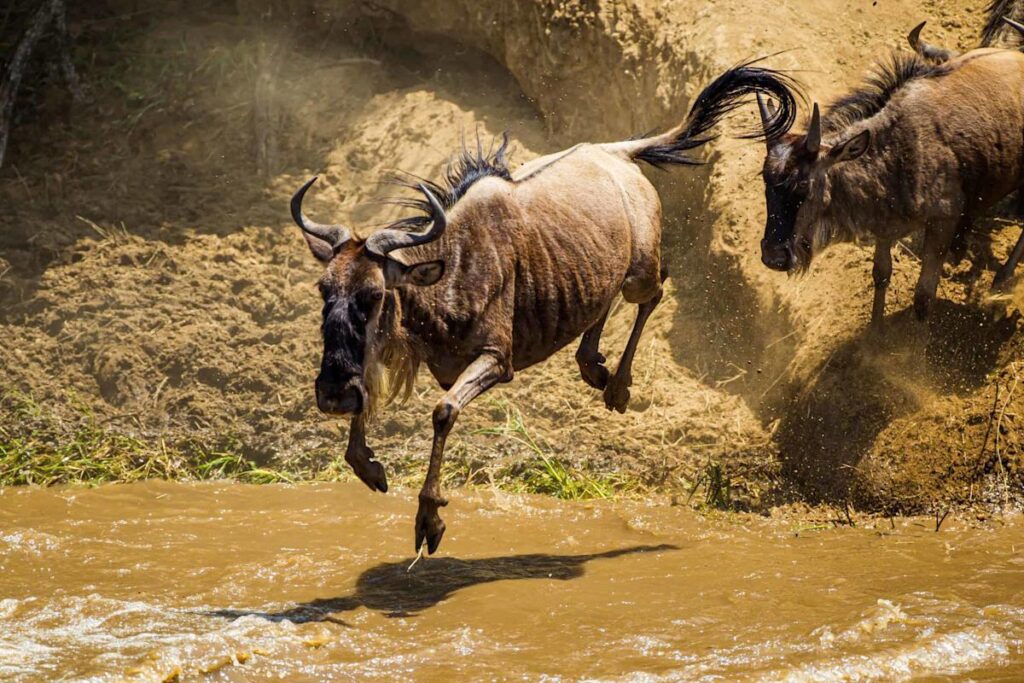
Every year, one of the world’s most breathtaking wildlife events unfolds across East Africa. During the Great Wildebeest Migration, more than 1.5 million wildebeest, accompanied by hundreds of thousands of zebras and gazelles, travel across the Serengeti and into Kenya’s Masai Mara in search of fresh grazing land.
One of the most dramatic moments of this journey is the Mara River crossing. Thousands of animals gather along the riverbanks before making a dangerous leap into fast-moving waters filled with strong currents and hungry crocodiles. But why do millions of animals risk this dangerous crossing every season? Understanding the migration helps travelers appreciate one of nature’s greatest survival stories.
What Is the Great Wildebeest Migration?
The Great Wildebeest Migration is the largest land migration of mammals on Earth. Every year, the herds travel in a continuous circular route between Tanzania’s Serengeti National Park and Kenya’s Masai Mara National Reserve.
Rather than following a fixed calendar, the migration is driven by rainfall and the search for fresh grass and water. As seasons change, the herds move to areas where food is most abundant, ensuring their survival throughout the year.
Why Do the Animals Cross the Mara River?
The Mara River crossing is not a planned event—it is a necessary part of survival.
As grazing land in the Serengeti becomes dry, the herds continue moving north toward the greener plains of the wildebeest migration Masai Mara. To reach these fertile grasslands, they must cross the Mara River.
The crossing happens because:
- Fresh grazing is available on the other side.
- Seasonal rainfall creates new feeding grounds.
- Water sources change throughout the year.
- The migration follows natural survival instincts passed through generations.
Although the crossing is dangerous, remaining in areas with little food would be even more challenging for the animals.
Why Is the Mara River Crossing So Dangerous?
The river crossing is one of the most dramatic moments of the migration because the animals face several natural obstacles.
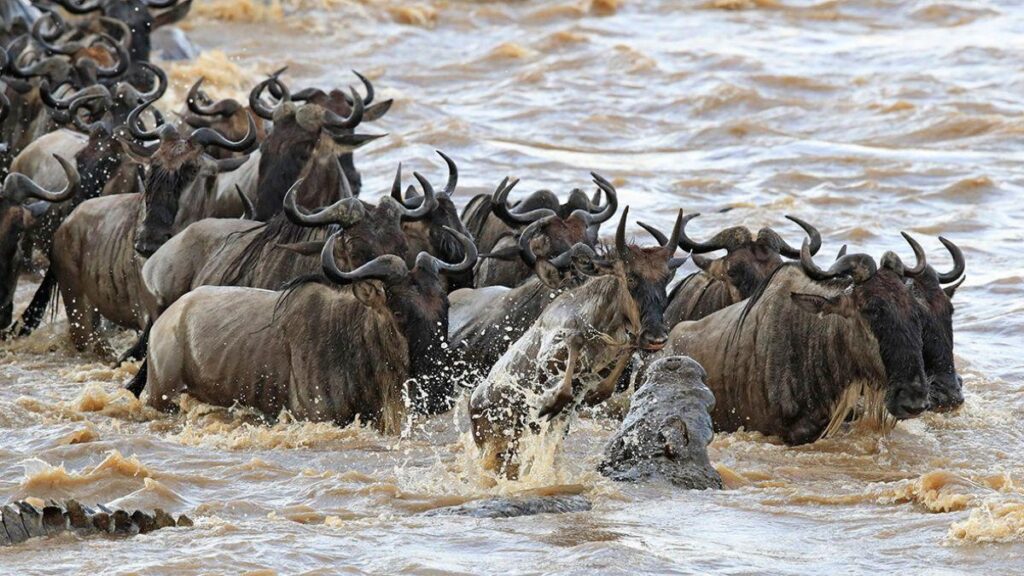
These include:
- Strong river currents
- Steep riverbanks
- Large Nile crocodiles
- Crowded crossing points
- Confusion among the herds
Despite these challenges, thousands of wildebeest successfully cross the river each season, continuing their remarkable journey.
The Role of Instinct in the Migration
Unlike humans, wildebeest do not use maps or planned routes. Their migration is guided by instinct and environmental conditions.
The herds respond to:
- Rainfall patterns
- Fresh grass growth
- Water availability
- Herd behavior
- Seasonal climate changes
This natural instinct has helped the migration continue for thousands of years, making it one of the world’s most fascinating wildlife spectacles.
Wildlife You Can See During the Migration
While wildebeest are the stars of the migration, many other animals benefit from this seasonal movement.
Visitors may also spot:
- Zebras
- Thomson’s gazelles
- Topis
- Elands
- Lions
- Leopards
- Cheetahs
- Hyenas
- Nile crocodiles
- Vultures and other birds of prey
The migration creates an entire ecosystem where predators and prey interact in remarkable ways.
Best Time to See Wildebeest Migration
Many travelers ask about the best time to see wildebeest migration, but the answer depends on what you hope to experience.
January to March
Visit the southern Serengeti to witness the calving season, when thousands of wildebeest calves are born.
April to June
The herds move through the central and western Serengeti, creating excellent game-viewing opportunities.
July to October
This is widely considered the best time to see wildebeest migration if you want to witness the famous Mara River crossings in northern Serengeti and the Masai Mara.
November to December
The herds begin their journey back toward southern Serengeti as seasonal rains return.
Because rainfall varies each year, migration timing may shift slightly.
Why the Masai Mara Is So Popular
The wildebeest migration Masai Mara attracts visitors from around the world because it offers some of the best opportunities to witness river crossings and predator activity.
Many safari travelers choose the Masai Mara because it offers:
- Excellent wildlife viewing
- Experienced safari guides
- Luxury safari camps
- Incredible photography opportunities
- High chances of witnessing river crossings
For many visitors, seeing thousands of wildebeest crossing the Mara River is the highlight of their African safari.
Tips for Witnessing the Mara River Crossing
If you’re planning your safari, these tips can improve your experience:
- Travel between July and October for the best chance of seeing river crossings.
- Book your safari several months in advance.
- Stay near northern Serengeti or the Masai Mara.
- Be patient, as crossings happen naturally and cannot be predicted precisely.
- Choose experienced guides who monitor herd movements daily.
Flexibility is often the key to witnessing this extraordinary event.
Conclusion
The Mara River crossing is one of the most extraordinary moments of the Great Wildebeest Migration, showcasing the incredible determination and survival instincts of millions of animals. As the herds journey between the Serengeti and the wildebeest migration Masai Mara, they face powerful river currents, predators, and countless natural challenges in search of fresh grazing land. For wildlife enthusiasts and photographers alike, witnessing this event is a truly unforgettable experience.
If you’re planning your safari, understanding the best time to see wildebeest migration can help you choose the ideal season for your adventure. At Wildebeest Sightings, we’re dedicated to providing reliable migration updates, expert insights, and helpful safari planning resources so you can experience the Great Migration at its most spectacular. Let Wildebeest Sightings help you make your dream African safari a reality.
Frequently Asked Questions
Why do wildebeest cross the Mara River?
They cross the river to reach fresh grazing land and reliable water sources as part of their annual migration between the Serengeti and the Masai Mara.
What is the Great Wildebeest Migration?
The Great Wildebeest Migration is the world’s largest land migration, involving more than 1.5 million wildebeest along with zebras and gazelles moving between Tanzania and Kenya.
What is the best time to see wildebeest migration?
The best time to see wildebeest migration for river crossings is generally between July and October, while the calving season is best experienced from January to March in southern Serengeti.
Is every river crossing the same?
No. Every crossing is unique. Some involve only a few hundred animals, while others see thousands crossing together, depending on herd movement and environmental conditions.


