


Space is one of the biggest concerns in modern Indian homes. Whether you live in a compact apartment or a mid-sized independent house, every square foot matters. When planning bedroom storage, one major decision can affect both comfort and usability — choosing between sliding and hinged wardrobes.
At first glance, both serve the same purpose: storing clothes, accessories, and personal belongings. But in reality, the type of wardrobe you select plays a crucial role in how spacious your room feels and how efficiently you use your available area.
In this detailed guide, we will compare sliding and hinged wardrobes from a practical, space-saving perspective and help you decide which option truly works better for Indian homes.
Understanding the Basics of Wardrobe Types
Before comparing, it is important to understand how both wardrobe systems work.
A hinged wardrobe uses traditional outward-opening doors fixed with hinges. This is the most common type of cupboard for clothes found in Indian households.
A sliding wardrobe uses doors that move horizontally on tracks. Instead of swinging open, the doors slide sideways, making them ideal for modern interiors where movement space is limited.
Both styles come in a wide range of wardrobe design options, materials, and finishes, from classic wooden cupboards to contemporary glass-panel wardrobes.
Why Space Optimization Matters in Indian Bedrooms
Urban Indian homes often face common challenges:
- Smaller bedroom dimensions
- Limited walking space
- Multi-functional rooms
- Shared wardrobes for couples
- Need for maximum storage in minimum area
In such environments, choosing the right wardrobe for bedroom use is not just about looks but about practicality and comfort.
A well-planned wardrobe furniture solution can make a small bedroom feel open and organized, while a poor choice can make it feel cramped and cluttered.
Sliding Wardrobes: Space Efficiency Explained
Sliding wardrobes are often promoted as the most space-saving option, and in many cases, this is true.
How Sliding Wardrobes Save Space
Since sliding doors do not require swing clearance, you can place your bed, side table, or dressing unit close to the wardrobe without worrying about door movement. This makes them perfect for:
- Compact master bedrooms
- Apartments under 1000 sq ft
- Guest rooms with limited walking area
- Children’s bedrooms where floor space is needed for play
A sliding wooden wardrobe can be installed flush against the wall, maximizing usable floor area while still offering full storage capacity.
Practical Advantages
- No obstruction while opening doors
- Ideal for narrow rooms
- Cleaner and more modern appearance
- Easy to combine with mirror panels
- Great for wall-to-wall storage solutions
Limitations to Consider
While sliding wardrobes save floor space, they do come with a few trade-offs:
- Only half of the wardrobe is accessible at one time
- Tracks need regular cleaning
- Slightly higher wardrobe price compared to basic hinged models
- Repairs can be more complex
Still, for urban Indian homes, these drawbacks are often minor compared to the benefits of better space utilization.
Hinged Wardrobes: Traditional but Still Relevant
Hinged wardrobes remain a popular choice because of their simplicity, durability, and flexibility.
How Hinged Wardrobes Use Space
Unlike sliding wardrobes, hinged doors need extra space in front to open fully. This means you must leave clearance between the wardrobe and the bed or any other furniture.
However, hinged wardrobes offer complete access to the entire cupboard for clothes at once, which many users find more convenient.
Practical Advantages
- Full visibility and access to all sections
- Lower initial wardrobe price
- Easier maintenance
- Works well with modular shelving
- Suitable for solid wood wardrobe construction
Limitations to Consider
- Requires more floor space
- Not ideal for narrow bedrooms
- Can restrict furniture placement
- Doors may collide with beds or dressing tables
For homes with larger bedrooms or traditional layouts, hinged wardrobes still perform extremely well.
Space Comparison: Sliding vs Hinged in Real Indian Homes
Let us look at practical room scenarios to understand which one saves more space.
In Small Bedrooms (10×10 ft or less)
Sliding wardrobes are the clear winner. Hinged doors in such rooms often block movement paths and reduce functional space.
In Medium Bedrooms (10×12 ft)
Both options work, but sliding wardrobes allow better layout flexibility. You can add a study table or dresser without worrying about door clearance.
In Large Bedrooms (12×14 ft and above)
Hinged wardrobes work just fine here. Space is not a limitation, so functionality and style become more important than space-saving alone.
Storage Efficiency vs Space Saving
Many people confuse storage capacity with space saving. These are not the same.
A hinged wardrobe and a sliding wardrobe of the same size can hold the same number of clothes. The real difference lies in how much free space you retain in the room after installing it.
Sliding wardrobes save movement space. Hinged wardrobes save budget and offer easier access. The best choice depends on whether your priority is room openness or user convenience.
Material Choice and Its Impact on Design
Whether you choose sliding or hinged, the material plays a major role in performance and aesthetics.
Wooden Wardrobes
A wooden wardrobe gives warmth and durability. Solid wood wardrobes, in particular, are known for their long life and premium appeal. They suit both sliding and hinged formats, although they are more commonly used in hinged styles due to weight considerations.
Engineered Wood and Laminates
These are widely used in modern wardrobe furniture. They are lighter, affordable, and perfect for sliding wardrobes.
Glass and Mirror Panels
Mostly used in sliding wardrobes, these add a sense of depth and make small bedrooms feel larger.
Style Matters: Modern vs Traditional Homes
Your interior style also influences the best choice.
For contemporary apartments, a stylish wardrobe with sliding doors complements modern furniture and minimalist design.
For traditional Indian homes, hinged wooden cupboards blend naturally with classic décor and vastu-aligned layouts.
Both styles can be customized, but sliding wardrobes usually dominate in modern wardrobe online catalogs due to their sleek look.
Cost Comparison and Long-Term Value
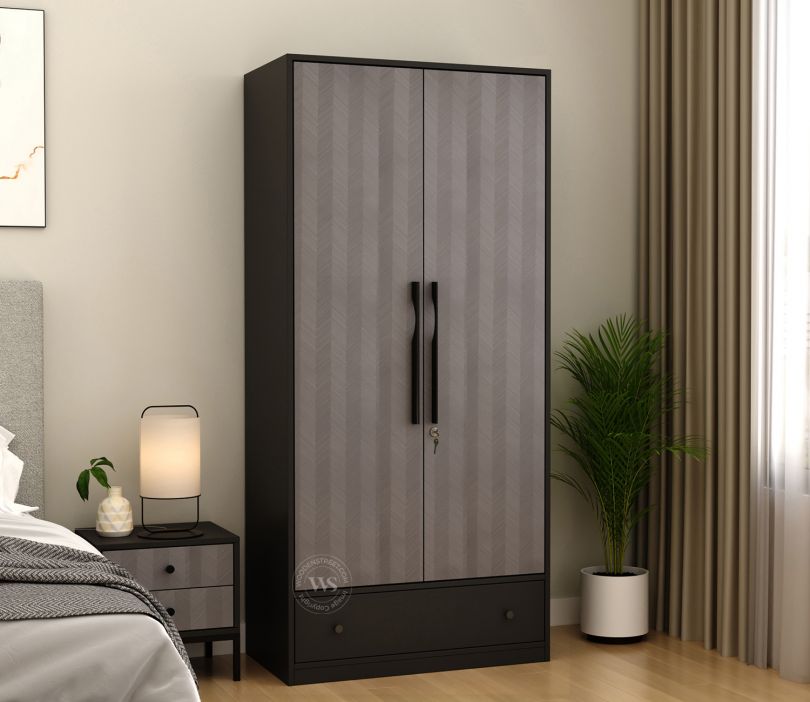
When comparing wardrobe price, hinged wardrobes generally start cheaper. A basic hinged cupboard for clothes costs less than a sliding one of similar size.
Sliding wardrobes cost more because of:
- Track systems
- Hardware
- Precision installation
However, when you consider long-term comfort and better use of space, sliding wardrobes often provide higher value in compact homes.
If you plan to buy wardrobe online, you will notice that sliding wardrobes fall in the mid to premium segment, while hinged wardrobes cover both budget and premium categories.
Which Wardrobe Is Best for Your Home?
Choose a sliding wardrobe if:
- Your bedroom is small or narrow
- You want a clutter-free look
- You prefer modern wardrobe design
- You plan to maximize walking space
Choose a hinged wardrobe if:
- Your bedroom is spacious
- You want full access to storage
- You prefer traditional wooden cupboards
- You want flexibility in door styles
Final Verdict: Which One Actually Saves More Space?
If your goal is purely space saving, sliding wardrobes are the better option for most Indian homes, especially apartments and compact bedrooms. They allow you to use your floor area more efficiently without compromising storage.
However, if your home has enough room and you value accessibility and simplicity over space optimization, hinged wardrobes remain a dependable and timeless choice.
The smartest decision is not about trends, but about matching the wardrobe type to your room size, lifestyle, and long-term needs.
When chosen wisely, both sliding and hinged wardrobes can become the perfect wardrobe for clothes, enhancing comfort, organization, and everyday living.